Parallel Parking Step by Step: Master It Before Test Day

Last Updated: 14 November 2026
Quick Summary
Parallel parking means reversing your car into a gap alongside the kerb, and you can master it by choosing a space at least one and a half times your car’s length, positioning level with the car in front, reversing slowly, and straightening up as you go in. Practise the sequence on a quiet road or empty car park until it feels automatic.
- Choose a gap at least one and a half times your car’s length.
- Stop level with the back bumper of the parked car in front, about a metre away.
- Reverse at little more than walking pace, at a slow, constant speed.
- Stop when your front wheel lines up with the rear of the car in front, at about 45 degrees to the kerb.
- Turn the wheel away from the kerb early and make small corrections if you drift.
Table of Contents
- Parallel Parking Steps: Finding the Space and Positioning Your Car
- Reversing, Turning and Straightening: The Manoeuvre Itself
- Parallel Parking Mistakes and What to Do When It Goes Wrong
- How to Practise Parallel Parking and Prepare for Your Driving Test
- Frequently Asked Questions
Parallel Parking Steps: Finding the Space and Positioning Your Car
Parallel parking is one of the manoeuvres learner drivers dread most, but it is also one of the most learnable. Mastering parallel parking step by step starts with choosing the right space and positioning your car correctly.
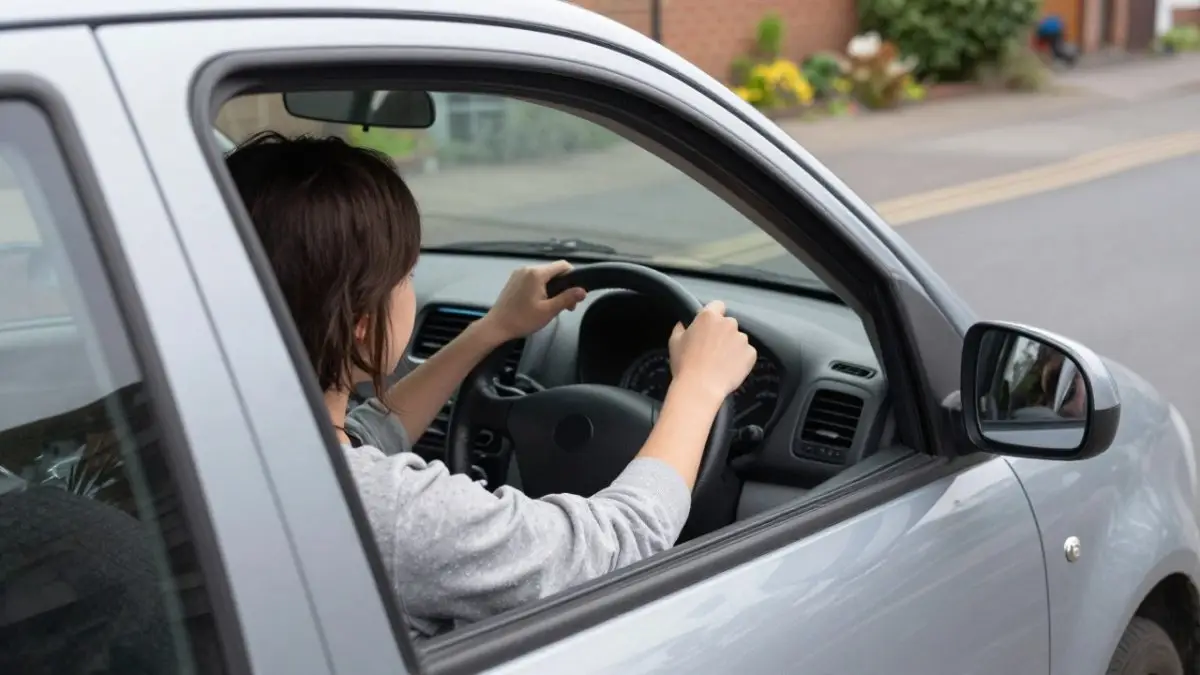
Parallel parking is the act of reversing a car into a gap between two parked vehicles so it lies alongside the kerb. Break it into stages and most people find it easier with practice on quiet roads.
Start by looking for a space at least one and a half times the length of your car. Drive alongside the parked vehicle in front, leaving about a metre between your cars. Stop level with the back bumper of that vehicle.
Signal your intention to the traffic behind you before you begin (The Highway Code – Using the road (159 to 203) – Guidance). Check your mirrors and blind spots, including over your shoulder, for cyclists and pedestrians (The Highway Code – Using the road (159 to 203) – Guidance).
The steps below summarise how to position your car and carry out the manoeuvre.
| Stage | What to do | Key check |
|---|---|---|
| Find a space | Choose a gap at least one and a half times your car’s length | Space size |
| Position alongside | Drive level with the back bumper of the parked car in front | About a metre between cars |
| Signal and check | Signal and check mirrors and blind spots | Cyclists and pedestrians |
| Reverse | Select reverse and move back at little more than walking pace | Slow, constant speed |
| Turn towards kerb | Stop when front wheel lines up with the rear of the car in front | About 45 degrees to the kerb |
| Straighten | Turn the wheel away from the kerb to bring the car in | Small early corrections |
Reversing, Turning and Straightening: The Manoeuvre Itself
With the space checked and your intention signalled, select reverse gear and move back slowly, at little more than walking pace. A slow, constant speed is easier to control than repeated stopping and starting, because you have time to watch the car’s angle and correct it early.
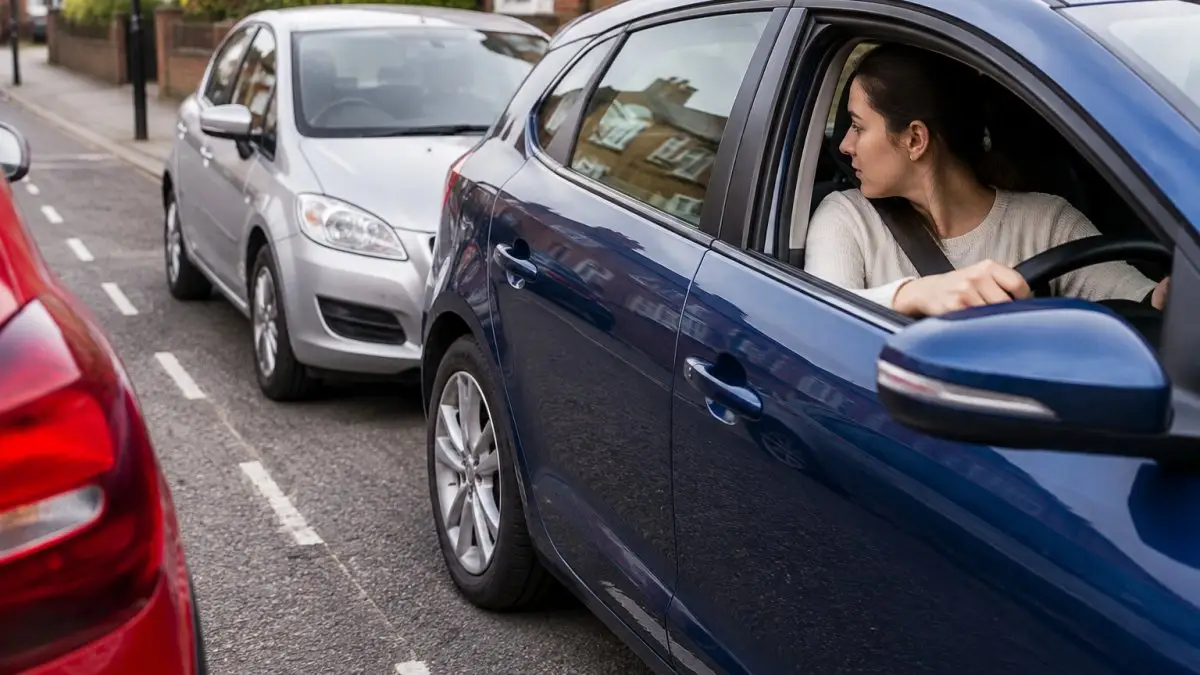
As you begin to reverse, turn the steering wheel towards the kerb. The car pivots around its rear wheels, so the back end swings in first while the front swings out towards the road. Watch the nearside mirror and glance over your left shoulder to track the rear corner against the kerb and the vehicle behind. Stop when your front wheel lines up roughly with the rear of the car in front, at about 45 degrees to the kerb.
Now turn the steering wheel away from the kerb to bring the front of the car in and straighten it as it moves into the space. Straightening the wheel at the right moment stops the car ending up at an awkward angle or too close to the car in front. If the car drifts away from the kerb, a small early correction is easier than a large late one.
Throughout the manoeuvre, keep your observations going. Check the nearside mirror for the kerb and pedestrians, the offside mirror for passing traffic, and look over both shoulders before and during the reverse. Repeated checks help keep the manoeuvre safe when someone walks out or a cyclist approaches (The Highway Code – Using the road (159 to 203) – Guidance).
Parallel Parking Mistakes and What to Do When It Goes Wrong
Most parallel parking mistakes come from rushing or losing track of the car’s position: reversing too fast, turning the wheel too late, and forgetting to straighten up.
Adapt the method to your car’s size and visibility. A larger vehicle or one with poor rear visibility needs more space and more frequent mirror checks.
How to Practise Parallel Parking and Prepare for Your Driving Test
Start on a quiet road or empty car park with two cones or markers set roughly one and a half car lengths apart. Practise the full sequence slowly: position alongside the front marker, signal, check, reverse, turn towards the kerb, straighten, turn away and finish parallel. Repeat until the order feels automatic, then gradually reduce the gap towards a realistic space.
Once the basics feel natural, move to a quiet residential street with parked cars and light traffic. Practise at different times of day for varied observation demands, and ask your instructor to watch your reference points rather than only the final position.
When the manoeuvre goes wrong, the recovery matters as much as the first attempt. If you finish too far from the kerb, pull forward, straighten up and reverse again with a slightly earlier turn towards the kerb. If you end up too close to the car behind, pull forward to create room before adjusting. If the car is at an awkward angle, reset by pulling forward and starting the reverse phase again rather than forcing it.
For test preparation, read the relevant Highway Code guidance on parking and observation, and remember the examiner is assessing your all-round awareness as well as the finished position. Keep checking mirrors and blind spots throughout, and treat pedestrians, cyclists and passing traffic as part of the manoeuvre rather than an interruption. Rehearsing likely test routes can help reduce surprises, and our Portsmouth driving test routes are a good place to start.
Frequently Asked Questions
How do you parallel park step by step?
Find a gap at least one car length longer than yours, then pull alongside the vehicle in front so your mirrors line up with its rear. Signal, check mirrors and blind spots, and reverse slowly while turning the steering wheel towards the kerb. Once the front of your car clears the rear of the vehicle ahead, straighten the wheel and continue until you are parallel and close to the kerb. Stop, check it is safe, and make small corrections as needed.
What are the most common parallel parking mistakes?
The most frequent errors are starting too far from the car in front, turning the wheel too early or too late, and reversing too quickly. Many learners also forget to check mirrors and blind spots before moving, or straighten the wheel too soon and end up too far from the kerb. Practising these points one at a time makes the full manoeuvre far more reliable on test day.
How can I practise parallel parking safely?
Choose a quiet street or an empty car park with clearly marked spaces, and set two cones or bags as reference points if you have no kerb to use. Practise with an accompanied driver or your instructor present, and keep speeds very low throughout. Repeat the same sequence each time until it feels routine, then gradually add distractions such as pedestrians and traffic.